
Is your stainless steel sink looking dull or covered in stubborn stains? You’re not alone.
A clean, shiny sink can make your entire kitchen feel fresh and inviting. But how can you get rid of those water spots, grime, and fingerprints without harsh chemicals or hours of scrubbing? In this guide, you’ll discover simple, effective ways to restore your sink’s sparkle using easy steps you can do right now.
Keep reading, and you’ll learn how to make your stainless steel sink shine like new again.
Choosing The Right Cleaning Tools
Cleaning a stainless steel sink needs the right tools. The right tools protect the sink from scratches and damage.
Using soft and gentle items helps keep the sink shiny and clean. Avoid harsh materials that can harm the surface.
Soft Cloths And Sponges
Soft cloths and sponges clean the sink gently. They remove dirt without scratching the steel surface.
Choose cloths made from cotton or other soft fabrics. Use a non-abrasive sponge to avoid marks.
- Cotton cloths are absorbent and gentle
- Soft sponges clean without scratching
- Avoid rough scrub pads in this category
Non-abrasive Scrubbers
Non-abrasive scrubbers help remove tough stains safely. They clean without damaging the steel finish.
Look for scrubbers made for stainless steel or delicate surfaces. Avoid steel wool or harsh brushes.
- Use nylon scrubbers labeled non-abrasive
- Test scrubbers on a small area first
- Do not use metal-based scrubbers
Microfiber Towels
Microfiber towels work well for drying and polishing. They pick up water spots and leave a streak-free shine.
These towels are soft and reusable. They reduce the risk of scratching and make cleaning easier.
- Choose high-quality microfiber for best results
- Wash towels regularly to remove trapped dirt
- Use dry microfiber to polish after cleaning
Credit: www.rd.com
Daily Cleaning Routine
Keeping your stainless steel sink clean every day helps it stay shiny and lasts longer. A simple routine makes the job quick and easy.
Follow these daily steps to keep your sink looking great and free of stains or spots.
Rinsing After Use
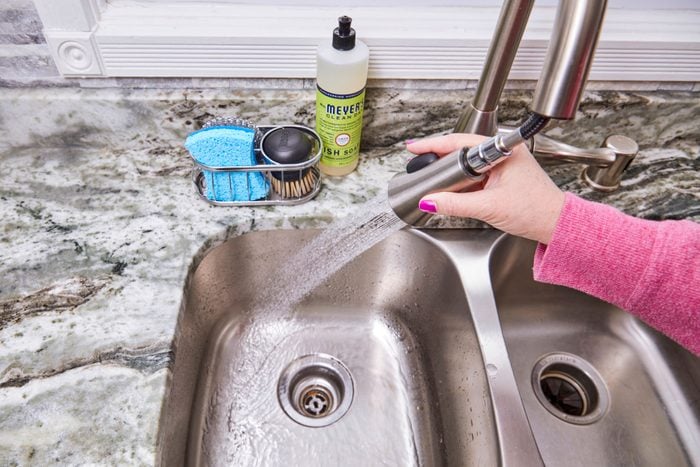
Rinse your sink with warm water after each use. This removes food bits and soap residue that can cause stains.
Make sure to rinse all parts of the sink, including corners and drain areas. This keeps it clean and fresh.
Wiping Down To Prevent Water Spots
Use a soft cloth to wipe your sink dry after rinsing. This stops water spots and mineral marks from forming.
Wiping also helps keep the surface smooth and shiny. Avoid abrasive towels that might scratch the steel.
Using Mild Soap Solutions
Clean your sink daily with a mild soap solution. Mix a small amount of gentle dish soap with warm water.
Use a soft sponge or cloth to wash the sink. Rinse well and wipe dry to keep it spotless and shiny.
Removing Stains And Spots
Stainless steel sinks can develop stains and spots over time. These marks affect the sink’s shine and cleanliness.
Using simple household items can clean your sink safely and effectively. Here are three easy methods to remove stains and brighten your sink.
Baking Soda Paste Method
Baking soda is a gentle abrasive that removes stains without scratching the steel. Make a paste with water for easy cleaning.
- Mix baking soda with water to form a thick paste.
- Apply the paste on stains and spots in the sink.
- Let it sit for 10 minutes to break down dirt.
- Scrub gently with a soft cloth or sponge.
- Rinse the sink well with warm water.
Vinegar For Hard Water Stains
White vinegar dissolves hard water stains and mineral deposits. It works well on cloudy or dull spots.
| Item | Use |
|---|---|
| White vinegar | Spray or soak to remove hard water stains |
| Soft cloth | Wipe surface after vinegar application |
| Warm water | Rinse off vinegar and loosened stains |
Spray vinegar on the stained area and let it sit for 5 minutes. Wipe with a soft cloth and rinse. Repeat if needed.
Lemon Juice For Brightening
Lemon juice brightens stainless steel and removes light stains. Its natural acid helps lift spots and adds shine.
- Cut a lemon in half and rub it on the sink surface.
- Let the juice sit for 5 minutes to work on stains.
- Rinse the sink with warm water to remove residue.
- Dry the sink with a clean cloth to prevent water spots.

Credit: www.dkhardware.com
Deep Cleaning Techniques
Cleaning a stainless steel sink deeply keeps it shiny and free from stains. Dirt, grime, and water spots can build up over time. Using the right methods helps protect the sink’s surface.
Here are some deep cleaning techniques that make your sink look new and clean. These methods are easy to follow and use common items or products.
Using Commercial Stainless Steel Cleaners
Commercial stainless steel cleaners are made to clean and protect sinks. They remove stains, water spots, and fingerprints without scratching the surface. Always follow the instructions on the product label.
Apply the cleaner with a soft cloth or sponge. Rub gently along the grain of the steel. Rinse with water and dry with a clean towel to avoid streaks.
- Wear gloves to protect your skin
- Use a soft cloth to avoid scratches
- Rinse well to remove all cleaner residue
Polishing With Olive Oil Or Mineral Oil
Polishing your sink with olive oil or mineral oil adds shine and helps prevent water spots. These oils create a thin protective layer on the steel surface.
Put a small amount of oil on a soft cloth. Rub it evenly over the sink, following the grain. Buff the sink until it looks shiny and smooth.
- Use only a few drops of oil
- Buff in small sections for even shine
- Wipe away any excess oil to prevent buildup
Avoiding Harsh Chemicals
Harsh chemicals can damage your stainless steel sink. Avoid bleach, ammonia, and abrasive cleaners. These can cause discoloration or scratches on the surface.
Stick to mild soaps, water, or specially made stainless steel cleaners. This keeps your sink safe and looking good for a long time.
- Do not use steel wool or rough scrubbers
- Avoid acidic cleaners like lemon juice or vinegar in large amounts
- Test any new cleaner on a small area first
Preventing Damage And Maintaining Shine
Cleaning a stainless steel sink keeps it bright and lasting longer. Using the right methods helps avoid scratches and stains.
Here are simple tips to protect your sink and keep its shine every day.
Avoiding Steel Wool And Abrasive Pads
Steel wool and harsh pads can scratch stainless steel surfaces. These scratches can trap dirt and cause rust over time.
- Use soft sponges or cloths for cleaning
- Avoid scrubbing pads with metal fibers
- Try nylon scrubbers for tough stains
- Check cleaning tools for rough edges
Drying The Sink After Cleaning
Water spots make your sink look dull. Drying the sink after washing stops these spots from forming.
| Drying Method | Benefit |
|---|---|
| Soft microfiber cloth | Absorbs water quickly without scratching |
| Clean towel | Prevents water spots and streaks |
| Air drying | Can leave water marks if not wiped |
Regular Maintenance Tips
Keeping your sink clean every day helps keep its shine and stops damage from building up.
- Rinse the sink after each use to remove food and soap
- Wipe the sink dry with a soft cloth
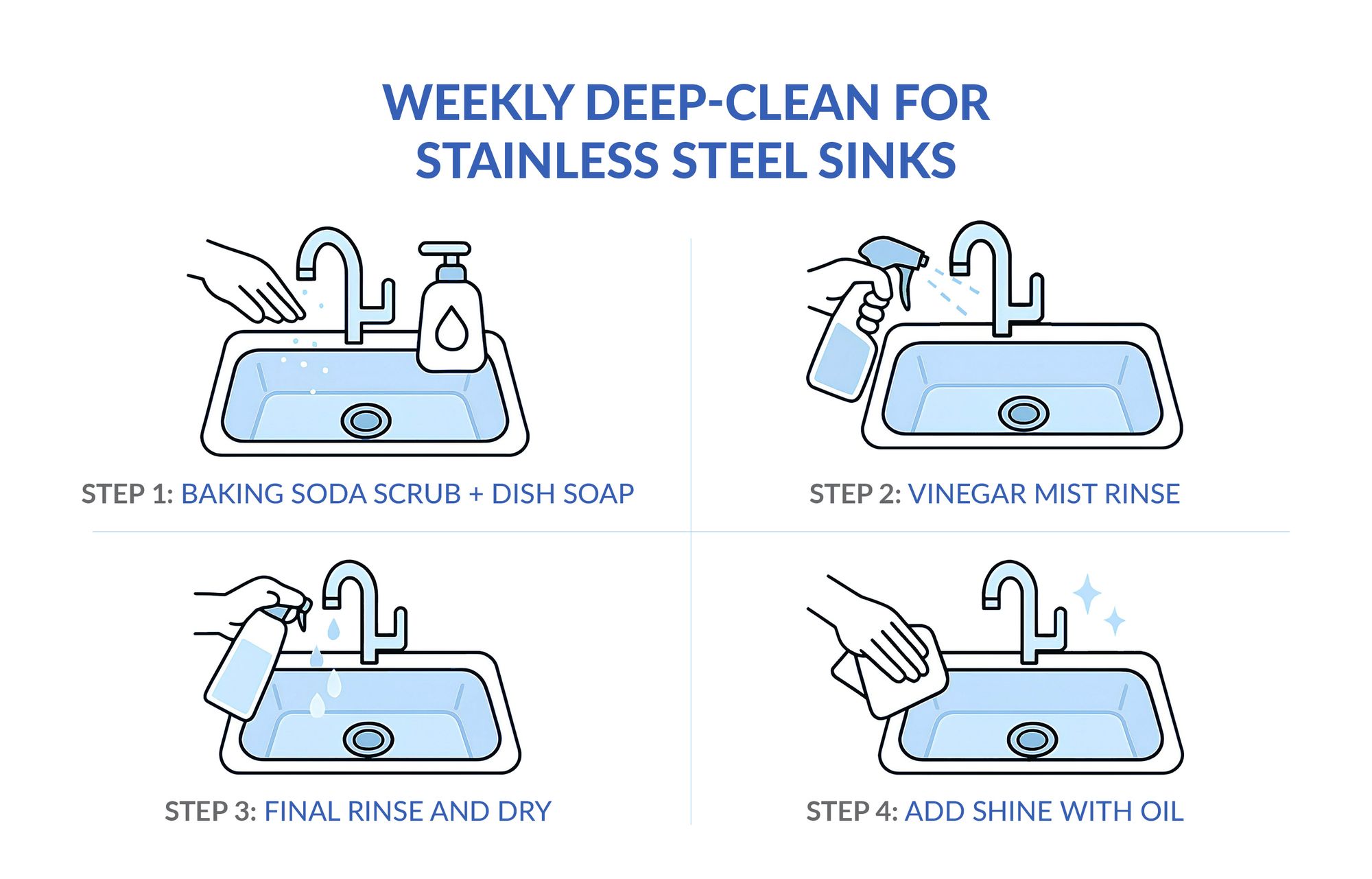
- Clean weekly with mild soap and water
- Use a stainless steel cleaner once a month for extra shine
- Avoid leaving acidic or salty substances on the surface

Credit: www.youtube.com
Frequently Asked Questions
How Often Should I Clean A Stainless Steel Sink?
Clean your stainless steel sink daily to prevent stains and water spots. Weekly deep cleaning removes grime and keeps it shiny. Regular maintenance extends the sink’s life and maintains hygiene.
What Household Items Clean Stainless Steel Sinks Effectively?
Use baking soda, vinegar, and mild dish soap for cleaning. Baking soda scrubs stains gently. Vinegar removes water spots and disinfects. Avoid harsh chemicals that damage the finish.
Can I Use Bleach To Clean A Stainless Steel Sink?
Avoid bleach as it can cause discoloration and corrosion. Use gentle cleaners like baking soda and vinegar instead. These keep the sink clean without damaging the surface.
How Do I Remove Stubborn Stains From A Stainless Steel Sink?
Apply a paste of baking soda and water to stains. Let it sit for 15 minutes, then scrub gently with a soft cloth. Rinse thoroughly to restore shine.
Conclusion
Cleaning a stainless steel sink is simple and quick. Use gentle cleaners to avoid scratches. Regular wiping keeps it shiny and fresh. Avoid harsh chemicals that can damage the surface. Dry the sink after washing to stop water spots. Small efforts make your sink look new longer. For tougher stains, you can use a mixture of baking soda and water to create a paste that can help remove stains from stainless steel. Gently rub this paste onto the stained area with a soft cloth, then rinse thoroughly to restore shine. Additionally, using a microfiber cloth for drying can help prevent scratches while giving your sink a polished finish. For tougher stains, a paste made from baking soda and water can effectively remove stains from stainless steel without causing any harm. Additionally, using a microfiber cloth for polishing can enhance its shine and prevent streaks. Regular maintenance ensures that your sink not only looks great but also lasts for years. For those wondering how to clean stainless steel sinks effectively, consider using a mixture of vinegar and baking soda for a natural cleaning solution. This combination not only helps to remove stains but also eliminates odors, leaving your sink looking and smelling fresh. Additionally, using a soft cloth or microfiber cloth during the cleaning process will help prevent any scratches while enhancing the sink's shine. For deeper cleaning, consider using a mixture of baking soda and vinegar, which effectively removes stains and odors. When learning how to clean stainless steel sink, incorporating these natural ingredients can make a significant difference. Regular maintenance will ensure your sink remains a focal point in your kitchen for years to come. Additionally, using a soft cloth or sponge will help maintain the sink's luster without causing any harm. For those looking to optimize their cleaning routine, here are some effective cleaning tips for stainless steel: consider using a mixture of vinegar and baking soda for a natural yet powerful cleaner. Lastly, rinsing with water and buffing with a microfiber cloth can enhance the shine and further protect the surface.
Try these easy steps and enjoy a clean kitchen sink every day. Caring for your sink helps maintain a healthy home environment. Stay consistent, and your sink will always shine bright.