
Choosing the right water softener size for your family of five can feel confusing. You want clean, soft water for drinking, cooking, and bathing—but how do you know what capacity fits your household?
Picking the wrong size could mean wasted money or constant maintenance. You’ll discover exactly how to find the perfect water softener that meets your family’s daily needs, saves you time, and keeps your home running smoothly. Keep reading to make the smartest choice for your water quality and peace of mind.
Credit: qualitywatertreatment.com
Water Softener Basics
Water softeners remove minerals like calcium and magnesium. These minerals cause hard water problems in homes.
Choosing the right size water softener helps your family get soft water all day. This guide explains how they work and why size matters.
How Water Softeners Work
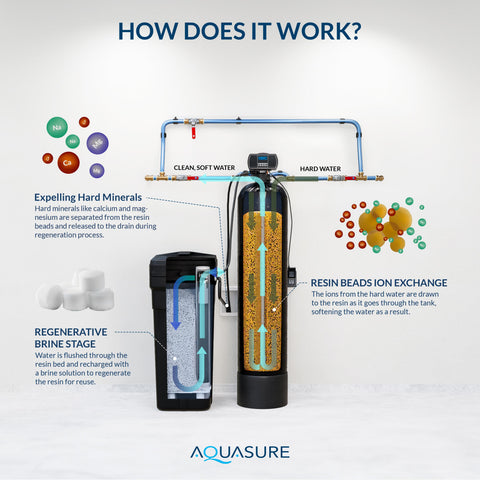
Water softeners use a process called ion exchange. Hard water passes through resin beads that trap minerals. These minerals are replaced with sodium or potassium ions.
- Hard water enters the tank
- Minerals stick to resin beads
- Sodium or potassium replaces the minerals
- Soft water flows out to your pipes
- System regenerates to clean resin beads
Why Size Matters
Water softener size depends on water hardness and daily water use. A family of 5 needs a system that handles enough water each day.
| Factor | Description | Example for Family of 5 |
| Water Hardness | Amount of minerals per gallon | 10-15 grains per gallon |
| Water Use | Gallons used daily per person | 75 gallons per person |
| Softener Capacity | Grains removed before regeneration | 30,000 to 40,000 grains |

Credit: nuvoh2o.com
Calculating Your Needs
Choosing the right water softener is important for your family. A family of five needs enough capacity to handle daily water usage. Understanding your needs helps you select the right size water softener.
Two main factors determine the size of your water softener. These are your daily water usage and the hardness of your water. Let's explore how to calculate each.
Daily Water Usage For A Family Of 5
Families use water for many daily tasks. These include bathing, cooking, and cleaning. Estimating your family's daily water usage is the first step.
The average person uses about 75 gallons of water each day. For a family of five, this totals 375 gallons daily.
- Bathing: 20 gallons per person
- Cooking: 5 gallons per person
- Cleaning: 10 gallons per person
Assessing Water Hardness Levels
Water hardness varies by location. It is measured in grains per gallon (gpg). Knowing your water hardness helps you decide the right softener.
A simple water test can measure hardness. You can also check with your local water provider for this information.
| 0-3 gpg | Soft water |
| 3-7 gpg | Moderately hard water |
| 7-10 gpg | Hard water |
| Over 10 gpg | Very hard water |
Choosing The Right Capacity
Choosing the right water softener size is important for a family of five. It helps save money and ensures clean water for daily use.
Water softeners come in different sizes. Picking the correct size depends on how much water your family uses each day.
Grain Capacity Explained
Grain capacity means how much hardness the softener can remove before it needs to recharge. Hardness comes from minerals like calcium and magnesium.
A softener with a higher grain capacity can treat more hard water before it runs out. This means less frequent recharging and better water softening.
- Smaller softeners have about 24,000 grains capacity
- Medium models hold around 32,000 to 48,000 grains
- Larger units can manage 64,000 grains or more
Matching Capacity To Usage
Estimate your family's daily water use to pick the right size. The average person uses 75 gallons each day.
Multiply daily gallons by hardness level to find needed grain capacity. This helps choose a softener that works well for your family.
| Family Size | Gallons per Day | Hardness (grains/gallon) | Suggested Grain Capacity |
|---|---|---|---|
| 5 people | 375 gallons | 10 grains | 37,500 grains |
| 5 people | 375 gallons | 15 grains | 56,250 grains |
| 5 people | 375 gallons | 20 grains | 75,000 grains |
Types Of Water Softeners
Choosing the right water softener is important for a family of five. Water softeners help reduce hard minerals in water. This protects pipes and improves water quality.
There are different types of water softeners. Each type works in a unique way. Let's look at the common types available today.
Salt-based Softeners
Salt-based softeners use salt to remove hard minerals. They replace calcium and magnesium with sodium. This process is called ion exchange.
These softeners are very effective. They can handle large amounts of hard water. Families with five people often choose this type for reliable soft water.
- Requires regular salt refills
- Needs space for the salt tank
- Works well for very hard water
- Improves soap and detergent performance
Salt-free Alternatives
Salt-free softeners do not use salt or chemicals. They change how minerals stick to surfaces. This prevents scale buildup without removing minerals.
They are low maintenance and eco-friendly. These systems suit families who want soft water without salt. They work best if water hardness is moderate.
- No need to add salt
- Better for the environment
- Prevents scale but does not soften water fully
- Good for people on low-sodium diets
Magnetic And Electronic Options
Magnetic and electronic water softeners use magnets or electric fields. They change mineral properties to reduce scale. These do not remove minerals from water.
These options require little space and no salt. Their effectiveness varies with water hardness and flow rate. Families should check if these systems suit their water type.
- Easy to install and maintain
- Does not add salt to water
- Effectiveness may vary
- Works best in areas with mild hard water
Installation And Maintenance
Choosing the right size water softener is important for a family of five. Proper installation and regular care keep it working well.
This guide covers space, location, and how to maintain your water softener for best results.
Space And Location Considerations
Select a place with enough room for the water softener and easy access for servicing. It should be near your main water line.
A dry, cool area protects the unit from damage. Avoid places with direct sunlight or freezing temperatures.
- Leave 2 feet of space around the unit for maintenance
- Place it near a drain for water discharge
- Ensure electrical outlet is nearby if needed
- Keep it away from heat sources
Regular Maintenance Tips
Water softeners need regular care to work well. Check salt levels often and refill when low.
Clean the brine tank yearly to stop salt buildup. Inspect the system for leaks or damage regularly.
- Check salt level every month
- Use high-quality salt for better results
- Clean the tank once a year
- Inspect valves and hoses for leaks
- Regenerate the system as recommended
Cost Factors
Choosing the right water softener size affects your budget. A family of five uses a lot of water daily.
Understanding costs helps you make a smart purchase. The main cost factors include initial investment, operating expenses, and long-term savings.
Initial Investment
The initial investment covers buying and installing the softener. Larger units cost more because they handle more water.
- Cost of the water softener unit
- Installation fees by a professional plumber
- Additional plumbing or electrical work if needed
- Possible permits or inspections
Operating Expenses
Operating expenses include salt, water, and electricity. Bigger softeners use more salt and power but run less often.
| Expense Type | Details |
| Salt | Required for regeneration; more salt needed for higher capacity units |
| Water | Used during regeneration cycle; depends on unit size and usage |
| Electricity | Power for valves and controls; varies by model and size |
| Maintenance | Periodic cleaning and part replacement |
Long-term Savings
Water softeners save money over time by protecting appliances and plumbing. They reduce soap and detergent use.
- Less scale buildup in pipes and appliances
- Lower energy bills due to efficient appliances
- Reduced need for repairs and replacements
- Saving on cleaning products
Top Picks For Families
Choosing the right water softener size is important for a family of five. It helps provide soft water without wasting salt or water. This guide shows top picks for families to help you decide.
We cover budget models, premium choices, and eco-friendly options. Each has features suited to different needs and budgets.
Best Budget Models
Budget water softeners give good performance without high costs. They work well for families who want to save money but still get soft water.
- Capacity: Around 32,000 grains, enough for daily use
- Simple controls for easy operation
- Reliable salt efficiency to reduce waste
- Compact design fits small spaces
Premium Choices
Premium models offer advanced features and larger capacities. They suit families who want extra convenience and strong performance.
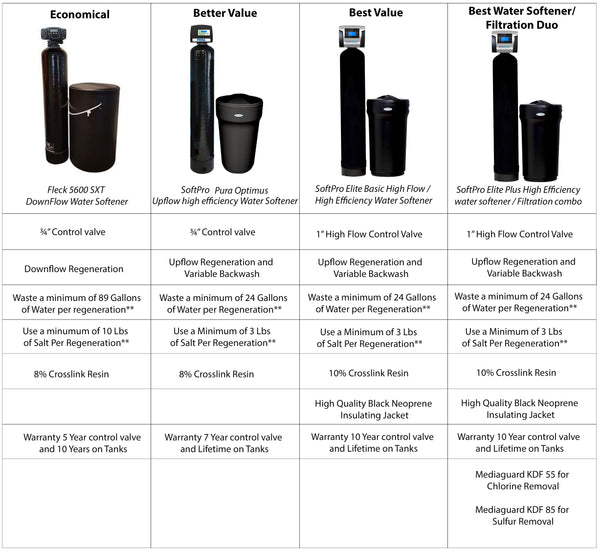
| Model | Capacity (Grains) | Features | Price Range |
|---|---|---|---|
| SoftWater Pro 48K | 48,000 | Smart regeneration, Wi-Fi control | High |
| ClearFlow Max 45K | 45,000 | Touchscreen, low salt use | High |
| PureEase Ultra 50K | 50,000 | Multi-tank system, fast service | High |
Eco-friendly Options
Eco-friendly water softeners save water and salt. They help reduce environmental impact while giving soft water to your family.
- Uses less salt per regeneration cycle
- Regenerates only when needed
- Reduces wastewater output
- Often uses renewable materials
Common Mistakes To Avoid
Choosing the right size water softener for a family of five is important. Picking the wrong size can cause problems. It may waste money or not soften water well.
This guide covers common mistakes people make. Avoiding these errors helps you get the best water softener for your home.
Oversizing Or Undersizing
Buying a water softener that is too big or too small can cause issues. An oversized unit wastes salt and water. An undersized one will not soften water enough for your family.
- Oversized softeners use more salt than needed.
- Undersized softeners leave hard water in your pipes.
- Proper sizing saves money and improves water quality.
Ignoring Water Testing
Do not buy a water softener without testing your water first. Water hardness varies by location. You need to know your water’s hardness to pick the right size softener.
| Water Hardness Level (Grains per Gallon) | Softener Capacity Needed (Grains) |
| 0-7 (Soft) | Small capacity softener |
| 7-14 (Moderate) | Medium capacity softener |
| 14+ (Hard) | Large capacity softener |
Neglecting Maintenance
Maintaining your water softener keeps it working well. Many people forget to check salt levels or clean the system. This causes poor water quality and damage to the softener.
- Check salt levels monthly and refill as needed.
- Clean the brine tank once a year.
- Inspect the system for leaks or damage regularly.
- Follow manufacturer’s instructions for care.

Credit: www.apecwater.com
Frequently Asked Questions
What Size Water Softener Fits A Family Of 5?
A 32,000 to 48,000 grain capacity water softener suits a family of 5. It efficiently handles daily water use and hardness levels, ensuring soft water without frequent regeneration.
How To Calculate Water Softener Size For 5 People?
Multiply the number of people by average daily water use (80 gallons). Then multiply by hardness grains per gallon. Choose a softener with a grain capacity meeting this total.
How Often Will A Softener Regenerate For 5 People?
For a family of 5, regeneration typically occurs every 2-3 days. This depends on water hardness and softener capacity, maintaining optimal soft water supply without wasting salt or water.
Can A Smaller Water Softener Serve A Large Family?
A smaller softener may struggle to handle daily water use and hardness. This causes frequent regeneration and reduced efficiency, making a larger capacity unit ideal for a family of 5.
Conclusion
Choosing the right water softener size saves money and time. A family of five needs a system that handles daily water use well. A 32,000 to 48,000-grain capacity usually works best. This size keeps soft water flowing without frequent refills.
Think about your water hardness level and usage habits. A good fit means softer water, cleaner pipes, and better appliances. Take time to measure your needs carefully. Soft water improves life in simple, practical ways.