
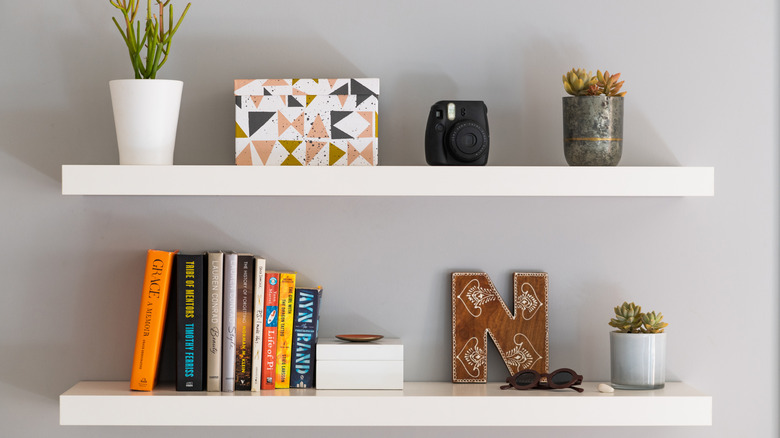
Looking to add extra storage or style to your space without damaging your walls? Hanging a floating shelf without drilling might sound tricky, but it’s easier than you think.
You don’t need special tools or a big DIY skillset to get it right. You’ll discover simple, effective ways to hang shelves that hold strong and look great—all while keeping your walls intact. Keep reading to find out how you can transform your room quickly and safely, without the hassle of drilling holes.

Credit: chill-house.co.uk
Choosing The Right Floating Shelf
Picking the right floating shelf is key when you want to hang it without drilling. The shelf must fit your space and hold the items you plan to place on it.
Some shelves work better with damage-free mounting. Knowing the shelf materials and design helps you avoid wall marks.
Materials And Weight Limits
Floating shelves come in many materials like wood, metal, or plastic. Each type holds different weights. Choose a shelf material that matches what you want to store.
Check the weight limit before buying. Lightweight shelves hold less but are easier to hang without drilling. Heavy shelves may need strong support.
- Wood shelves are sturdy but can be heavy
- Metal shelves hold more weight and are slim
- Plastic shelves are light but hold less weight
- Know the max weight the shelf can support safely
Designs Suited For Damage-free Mounting
Some shelf designs are made for easy, no-drill mounting. These often use strong adhesives or brackets that stick to walls.
Look for shelves with flat backs and smooth surfaces. These provide better contact for glue or tape. Avoid shelves with uneven backs or heavy frames.
- Shelves with adhesive strips or pads built-in
- Lightweight shelves with wide flat backs
- Magnetic shelves for metal wall surfaces
- Modular shelves that lock without screws
Surface Preparation
Before hanging a floating shelf without drilling, it's important to prepare the surface. Proper preparation ensures the shelf will hold securely.
Pay attention to both cleaning and assessing the wall to prevent any mishaps.
Cleaning And Drying Walls
Clean walls to ensure adhesive strips stick properly. Dust and dirt can weaken the grip.
- Use a mild detergent mixed with water.
- Wipe the wall with a soft cloth to remove grime.
- Rinse with clean water and let dry completely.
- Ensure no moisture remains on the surface.
Assessing Wall Material
Different wall materials require different preparation techniques. Identify the type of wall you have.
| Wall Type | Considerations |
| Drywall | Ensure it's clean and dry. Avoid areas near seams. |
| Plaster | Check for cracks and repair before hanging. |
| Tile | Use strong adhesive strips suitable for tiles. |
Adhesive Options For Mounting
Hanging a floating shelf without drilling can keep your walls intact. Using adhesives is a good way to mount shelves without making holes.
There are several adhesive options available. Each one has its own strength and use cases.
Types Of Strong Adhesives
Strong adhesives include construction glue, epoxy, and heavy-duty mounting strips. These options can hold various weights depending on the product.
Construction glue works well on wood and metal shelves. Epoxy creates a very strong bond but needs mixing before use. Heavy-duty mounting strips are easy to use but best for light shelves.
Double-sided Mounting Tapes
Double-sided mounting tapes stick to both the shelf and the wall. They are simple to apply and remove without damage.
- Make sure the surface is clean and dry before applying.
- Press firmly for several seconds to secure the tape.
- Check the weight limit specified on the tape packaging.
Pros And Cons Of Each Method
| Adhesive Type | Pros | Cons |
| Construction Glue | Strong bond, good for heavy shelves | Long drying time, messy application |
| Epoxy | Very strong, durable | Needs mixing, hard to remove |
| Mounting Strips | Easy to use, no damage on removal | Limited weight support |
| Double-Sided Tape | Quick application, clean | May lose stickiness over time |
Using Brackets And Clips
Floating shelves add style and storage without heavy tools. You can hang them without drilling using brackets and clips. These methods protect your walls and save time.
Below are two popular no-drill options. They use strong brackets or clips to hold shelves safely. Follow simple steps to install them correctly.
No-drill Brackets
No-drill brackets use adhesive or pressure to hold the shelf. They work best on smooth, clean walls. These brackets come with strong glue pads or suction cups.
- Clean the wall surface well before applying brackets.
- Press the bracket firmly to the wall for about 30 seconds.
- Wait for the recommended time before placing the shelf.
- Make sure the shelf weight does not exceed the bracket limit.
- Use multiple brackets for longer shelves to spread the weight.
Clamp And Clip Solutions
Clamps and clips hold floating shelves by gripping edges or using tension. They fit tightly and do not require holes. These solutions suit lightweight shelves and temporary setups.
| Clamp Type | Best For | Key Feature |
| Spring Clamps | Thin wooden shelves | Easy to attach and remove |
| Magnetic Clips | Metal shelves or frames | Strong hold without marks |
| Adjustable Clips | Different shelf thickness | Fits various sizes securely |
Alternative Hanging Methods
Floating shelves add style and storage without taking up floor space. Drilling holes is not the only way to hang these shelves.
You can use other methods that protect your walls and are easy to install. These options work well for renters or anyone avoiding damage.
Command Strips And Hooks
Command strips and hooks stick to walls and hold light to medium weight shelves. They are easy to remove and leave no marks.
- Choose strips rated for your shelf’s weight
- Clean the wall surface before applying
- Press strips firmly for 30 seconds
- Wait one hour before hanging the shelf
- Use multiple strips for extra support
Tension Rod Supports
Tension rods fit between two walls and hold shelves without nails or glue. They work best in small spaces like corners or alcoves.
| Material | Best Use | Weight Limit |
| Steel Tension Rod | Heavy shelves in narrow spaces | Up to 30 lbs |
| Plastic Tension Rod | Light shelves or decorative items | Up to 10 lbs |
| Adjustable Tension Rod | Flexible shelf sizes | Varies by model |
Step-by-step Installation Guide
Installing a floating shelf without drilling keeps your walls intact. This guide shows you how to do it safely and neatly.
Follow these clear steps to hang your shelf using adhesives or clips. Measure carefully, attach properly, and secure firmly.
Measuring And Marking
Begin by choosing the spot for your floating shelf. Use a level to make sure it will sit straight on the wall.
- Measure the length of the shelf to find its center point.
- Mark the center on the wall lightly with a pencil.
- Use a level to draw a straight, light line where the shelf will sit.
- Mark the points for any clips or adhesive strips according to the shelf size.
Applying Adhesives Or Clips
Select the right adhesive or clips for your shelf and wall type. Clean the wall surface well before applying anything.
| Type | Best Surface | Drying Time |
|---|---|---|
| Heavy-duty adhesive strips | Painted drywall, smooth surfaces | 1 hour |
| Mounting clips | Wood, plaster, brick | None (immediate use) |
| Double-sided tape | Glass, tiles, metal | 30 minutes |
Apply the adhesive or clips to the shelf and press firmly against the wall. Hold for the recommended time to ensure strong bonding.
Securing The Shelf
After applying, check the shelf for stability. Adjust if needed to keep it level and safe for use.
- Press the shelf against the wall for at least one minute.
- Use a level to confirm it is straight.
- Leave the shelf untouched for the adhesive’s curing time.
- Test the shelf gently before placing items on it.
Maintaining Stability And Safety
Hanging a floating shelf without drilling needs careful planning. Stability and safety are key to avoid accidents.
You must focus on how the weight spreads and check the shelf often. This helps keep it secure over time.
Weight Distribution Tips
Place heavy items near the wall or the shelf’s support points. Keep lighter items towards the front and edges.
- Distribute weight evenly across the shelf surface.
- Avoid placing all heavy objects on one side.
- Use small stands or pads to balance uneven items.
- Do not overload the shelf beyond its weight limit.
Regular Checks And Adjustments
Check the shelf regularly for any signs of slipping or damage. Make adjustments as needed to maintain safety.
| Check Point | What to Look For | Action Needed |
| Brackets or Adhesive | Looseness or peeling | Re-secure or replace |
| Shelf Surface | Warping or cracks | Remove items and repair |
| Weight Distribution | Uneven load | Rearrange items evenly |
| Wall Contact | Gaps or movement | Tighten or adjust shelf |

Credit: www.reddit.com
Removing Floating Shelves Without Damage
Floating shelves add style and storage without bulky brackets. Sometimes, you need to remove them without harming the wall or shelf.
This guide helps you remove shelves safely. It covers how to take off adhesive and fix the wall afterward.
Safe Adhesive Removal
Removing adhesive without damage takes patience and the right tools. Avoid pulling hard to prevent peeling paint or drywall.
- Use a hairdryer to warm the adhesive for a few minutes.
- Gently pry the shelf away using a plastic putty knife.
- Apply adhesive remover or rubbing alcohol on residue spots.
- Let the remover sit for 5-10 minutes before wiping.
- Use a soft cloth to clean off sticky areas carefully.
- Repeat heating and removal if adhesive remains stubborn.
Wall Repair Tips
After shelf removal, small holes or marks may appear on the wall. Fixing them keeps your wall smooth and ready for repainting.
| Damage Type | Repair Method | Tools Needed |
| Small holes | Fill with spackle | Putty knife, sandpaper |
| Paint peeling | Sand, prime, and repaint | Sandpaper, paintbrush, primer |
| Adhesive residue | Clean with rubbing alcohol | Cloth, rubbing alcohol |

Credit: crystelmontenegrohome.com
Frequently Asked Questions
How Can I Hang A Floating Shelf Without Drilling?
You can use strong adhesive strips or mounting tape designed for shelves. These options avoid wall damage and are easy to apply. Ensure your wall surface is clean and smooth for best adhesion. This method supports lightweight shelves and items securely.
What Materials Are Best For No-drill Floating Shelves?
Lightweight wood or acrylic shelves work best for no-drill installation. They reduce the load on adhesives or brackets. Choose shelves with flat backs for better contact with the wall. This helps ensure stability and durability without drilling holes.
Can No-drill Shelves Hold Heavy Items Safely?
No-drill shelves generally hold light to medium-weight items safely. Heavy items may cause adhesives to fail or shelves to fall. Always check product weight limits before installation. For heavy loads, consider drilling or using wall anchors for security.
What Surfaces Are Suitable For No-drill Shelf Mounting?
Smooth, clean surfaces like painted drywall, glass, or tiles are ideal. Textured or uneven surfaces reduce adhesive effectiveness. Avoid wallpapered or porous surfaces as adhesives may not stick well. Proper surface preparation improves shelf stability and safety.
Conclusion
Hanging a floating shelf without drilling is simple and neat. Use strong adhesive strips or brackets made for this purpose. Measure carefully and check the wall’s surface first. This method saves time and keeps your walls clean. Perfect for renters or those who avoid damage.
With the right tools, you can add style without effort. Try it yourself and enjoy your new shelf today.