
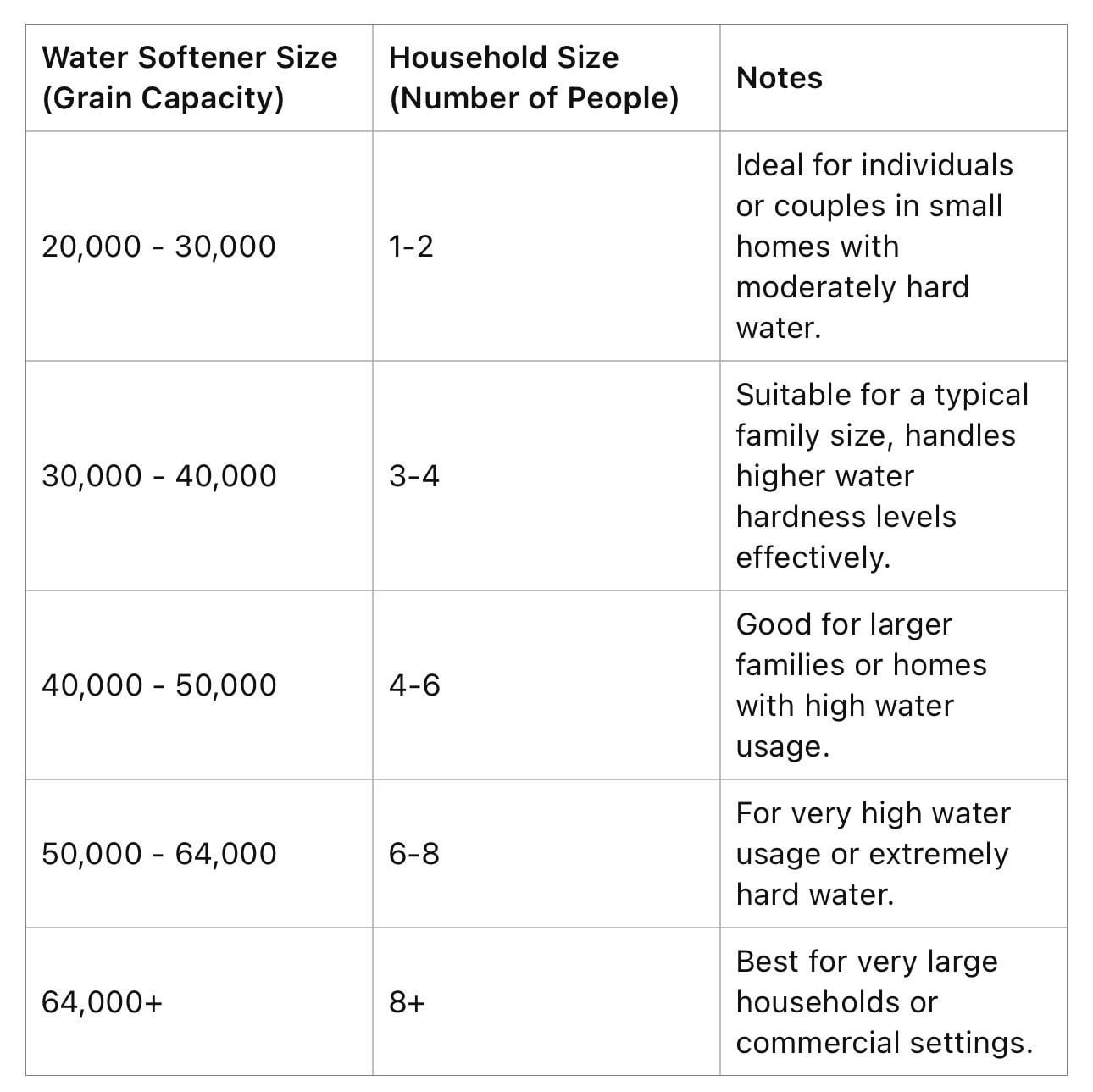
Are you wondering how many grains your water softener should have for your family of four? Choosing the right size is more important than you might think.
If it’s too small, you’ll deal with hard water problems more often. Too big, and you could be wasting money and space. You’ll discover exactly how to find the perfect grain capacity to keep your home’s water soft, smooth, and efficient.
Keep reading—your family’s comfort and your water bill depend on it.

Credit: www.lowes.com
Factors Affecting Water Softener Size
Choosing the right water softener size is important for a family of four. The size depends on several factors that affect how much water needs softening.
Understanding these factors helps select a softener that works well and lasts longer.
Water Hardness Levels
Water hardness measures the amount of calcium and magnesium in water. Harder water needs a bigger softener to remove minerals.
Check your water hardness in grains per gallon (gpg) to know the softener size needed.
- Soft water: 0-3 gpg
- Moderately hard: 3-7 gpg
- Hard water: 7-10 gpg
- Very hard: 10+ gpg
Daily Water Usage
Daily water use affects how much water the softener must treat. A family of four uses about 80-100 gallons per person each day.
Multiply the number of people by daily usage to find total water use in gallons.
| Family Members | Daily Water Usage (Gallons) |
|---|---|
| 4 | 320 - 400 |
Family Size Impact
More family members mean more water use and harder demand on the softener. A family of four has moderate water needs.
Bigger families need larger softeners to handle more water and hardness.
- 1-2 people: Small softener
- 3-4 people: Medium softener
- 5+ people: Large softener
Water Softener Capacity
Capacity is the amount of hardness the softener can remove before regeneration. It is measured in grains.
Choose a softener with capacity matching your water hardness and daily water use.
- Example: 32,000 grains softener for moderate hardness and family of 4
- Higher capacity means less frequent regeneration
- Lower capacity may lead to poor softening and damage
Calculating Grain Capacity For Family Of 4
Choosing the right water softener grain capacity is essential for a family of four. It ensures efficient water softening and resource management.
This guide helps you calculate the ideal grain capacity by considering daily water use and water hardness.
Estimating Daily Water Consumption
First, you need to estimate how much water your family uses daily. This helps in calculating the grain capacity needed.
- Each person uses about 75 gallons of water daily.
- Multiply by the number of people in your household.
- Total daily water use for a family of four is 300 gallons.
Measuring Water Hardness
Water hardness measures the minerals in your water. It affects how much softening is required.
Get a water hardness test kit to measure grains per gallon (GPG).
Formula For Grain Capacity
Use the formula: Daily Water Use (gallons) × Water Hardness (GPG) = Grain Capacity Needed.
| Component | Value |
| Daily Water Use | 300 gallons |
| Water Hardness | 10 GPG |
| Grain Capacity | 3,000 grains |
Example Calculation
Let's calculate the grain capacity for a family of four with 10 GPG water hardness.
Using the formula, 300 gallons × 10 GPG = 3,000 grains. This is the grain capacity needed for efficient water softening.
Types Of Water Softeners
Water softeners help remove minerals that cause hard water. Hard water can damage pipes and appliances. Choosing the right type depends on your needs and water hardness.
There are different types of water softeners. Each works in a unique way. Understanding these types helps you pick the best one for your family.
Salt-based Softeners
Salt-based softeners use a process called ion exchange. They remove calcium and magnesium from water. These minerals cause water hardness. The system replaces them with sodium ions.
- Needs regular salt refills
- Very effective at softening water
- Can remove up to 99% of hardness minerals
- May add small amounts of sodium to water
Salt-free Softeners
Salt-free softeners do not use salt or chemicals. They use a method called template-assisted crystallization. This changes hardness minerals into crystals. The crystals do not stick to pipes or appliances.
| Feature | Salt-Free Softeners | Salt-Based Softeners |
| Salt Use | No | Yes |
| Maintenance | Low | Medium |
| Water Softening Effectiveness | Moderate | High |
| Environmental Impact | Low | Higher due to salt discharge |
Magnetic And Electronic Softeners
Magnetic and electronic softeners use magnetic fields. They change the way minerals behave in water. This reduces scale buildup in pipes. These devices do not remove minerals.
Advantages:
- No salt or chemicals needed
- Easy to install
- Low maintenance
Limitations:
- Effectiveness varies by water type
- Does not soften water fully
- More research needed on long-term results
Choosing The Right Water Softener
Choosing a water softener is important for a family of four. It helps protect pipes and appliances from hard water damage. Picking the right size and features can save money and time.
This guide covers key points to help you find the best water softener for your home needs.
Matching Capacity To Family Needs
A family of four usually uses about 80 to 100 gallons of water daily. Water softeners are rated by grain capacity. This means how many grains of hardness the softener can remove before it needs recharging.
- Use a 32,000 to 40,000 grain water softener for moderate hardness.
- Choose 40,000 to 48,000 grains for very hard water.
- Check water hardness level before buying.
- Higher capacity models last longer between regenerations.
Energy Efficiency
Energy-efficient water softeners save electricity and reduce utility bills. Look for models with timers or demand-initiated regeneration. These use energy only when needed.
| Feature | Benefit |
| Timer Control | Softens water at set times |
| Demand Regeneration | Runs only when water use reaches a limit |
| Low Salt Indicator | Helps avoid wasting salt and energy |
Maintenance Requirements
Water softeners need regular care. Salt levels must be checked and refilled. Some models need filter changes or cleaning.
- Check salt every month.
- Clean the brine tank yearly.
- Replace filters as recommended.
- Choose models with easy maintenance for less hassle.
Budget Considerations
Water softeners vary in price. Consider initial cost and running expenses like salt and electricity. A more expensive model may save money over time.
| Cost Range | Includes | Notes |
|---|---|---|
| $400 - $700 | Basic models | Good for soft water needs |
| $700 - $1,200 | Mid-range | Better efficiency and features |
| $1,200+ | High-end models | Energy-saving and low maintenance |
Installation And Maintenance Tips
Choosing the right grain water softener for a family of four means knowing how to install and maintain it. Proper care keeps the system working well and extends its life.
Good installation and regular upkeep prevent common problems. These tips will help you handle your water softener easily.
Professional Vs Diy Installation
Installing a water softener can be done by a professional or as a DIY project. Professionals ensure the system fits well and works right from the start.
DIY installation saves money but needs basic plumbing skills. Follow the instructions carefully to avoid leaks or damage.
- Professional installation offers warranty and support
- DIY requires tools and some plumbing knowledge
- Check local codes before installing yourself
- Test for leaks and correct settings after setup
Regular Salt Refills
Your water softener uses salt to remove minerals from water. You must refill the salt regularly to keep it working well.
Check the salt level once a month. Use high-quality salt made for water softeners to avoid clogs or damage.
- Keep salt above the water level in the brine tank
- Never let the salt run out completely
- Clean the tank if salt bridges or clumps form
- Use pellets or crystals, not table salt
Cleaning And Servicing
Cleaning your water softener helps it work better and last longer. Service it once or twice a year to remove buildup.
Flush the resin bed and clean the brine tank to avoid problems. Follow the manufacturer’s guide for safe cleaning steps.
- Turn off water and power before cleaning
- Remove salt and clean the tank with mild soap
- Rinse the resin bed with clean water
- Check for worn parts and replace if needed
Troubleshooting Common Issues
If your water softener stops working well, simple fixes might help. Check these common issues first.
Look for salt bridges, power problems, or incorrect settings. Fixing these can restore soft water quickly.
- Break salt bridges using a broom handle carefully
- Ensure power supply is connected and working
- Reset controls if water hardness changes
- Clean clogged valves and check water pressure
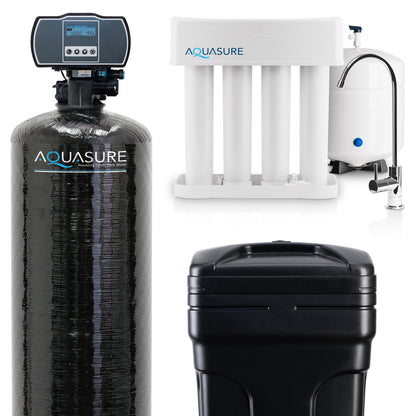
Credit: aquasureusa.com
Benefits Of Properly Sized Water Softeners
Choosing the right size water softener is important for a family of four. It helps keep water clean and safe for daily use.
A well-sized system works better and lasts longer. It also saves money and supports better health.
Improved Water Quality
Properly sized water softeners remove hard minerals effectively. This improves water taste and feel. Soft water helps with cleaning and reduces soap use.
Extended Appliance Lifespan
Hard water causes scale buildup in appliances. A softener stops this buildup and protects your devices. This means your washing machine, dishwasher, and water heater last longer.
Cost Savings
- Lower repair costs for appliances
- Less soap and detergent needed
- Reduced energy bills due to efficient appliances
- Fewer plumbing issues from mineral buildup
Health Advantages
| Health Benefit | Explanation |
| Skin Care | Soft water reduces dryness and irritation. |
| Hair Care | Soft water makes hair smooth and less brittle. |
| Reduced Chemicals | Less soap means fewer chemicals on skin and in water. |
Credit: www.ecopurehome.com
Frequently Asked Questions
How Many Grains Water Softener For A Family Of 4?
A 32,000 to 40,000 grain water softener is ideal for a family of four. It balances water hardness and household water usage efficiently.
What Grain Capacity Suits Average Water Hardness Levels?
For moderate hardness, a 32,000-grain capacity softener works well. It prevents scale buildup and extends appliance lifespan.
How Does Water Usage Affect Softener Grain Size?
Higher water consumption requires a larger grain capacity. It ensures continuous soft water supply without frequent regeneration.
Can A Smaller Grain Softener Work For Four People?
A smaller softener may regenerate too often. This leads to inefficiency and higher salt and water use.
Conclusion
Choosing the right grain water softener matters for your family’s needs. A family of four usually needs a softener between 30,000 and 40,000 grains. This size helps keep water soft and appliances safe. Too small a unit means frequent refills and less comfort.
Too big wastes money and space. Think about your water hardness and daily water use. This simple step ensures softer water and a happier home. Easy and smart.